Beautiful, Unsettling Detail
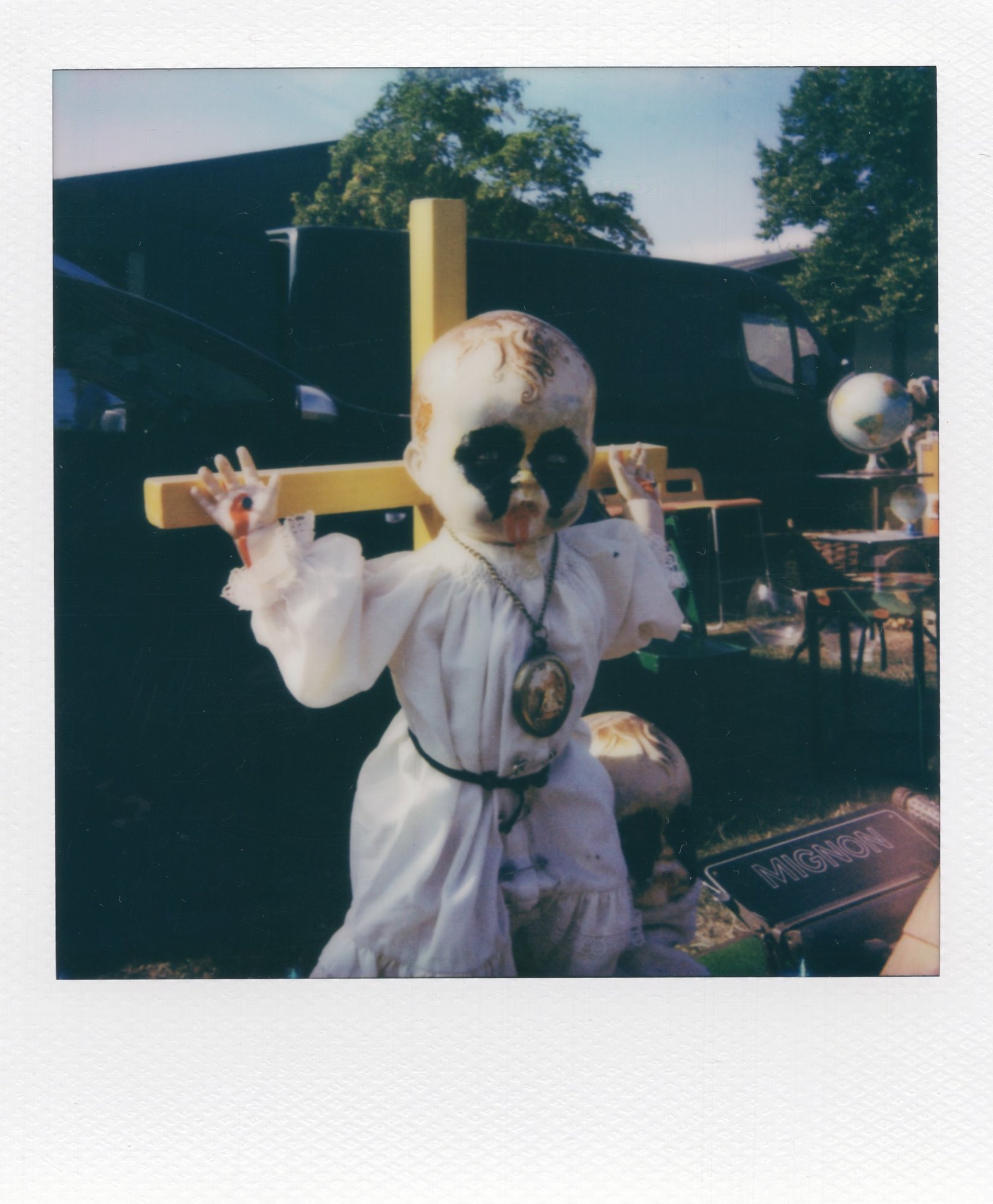
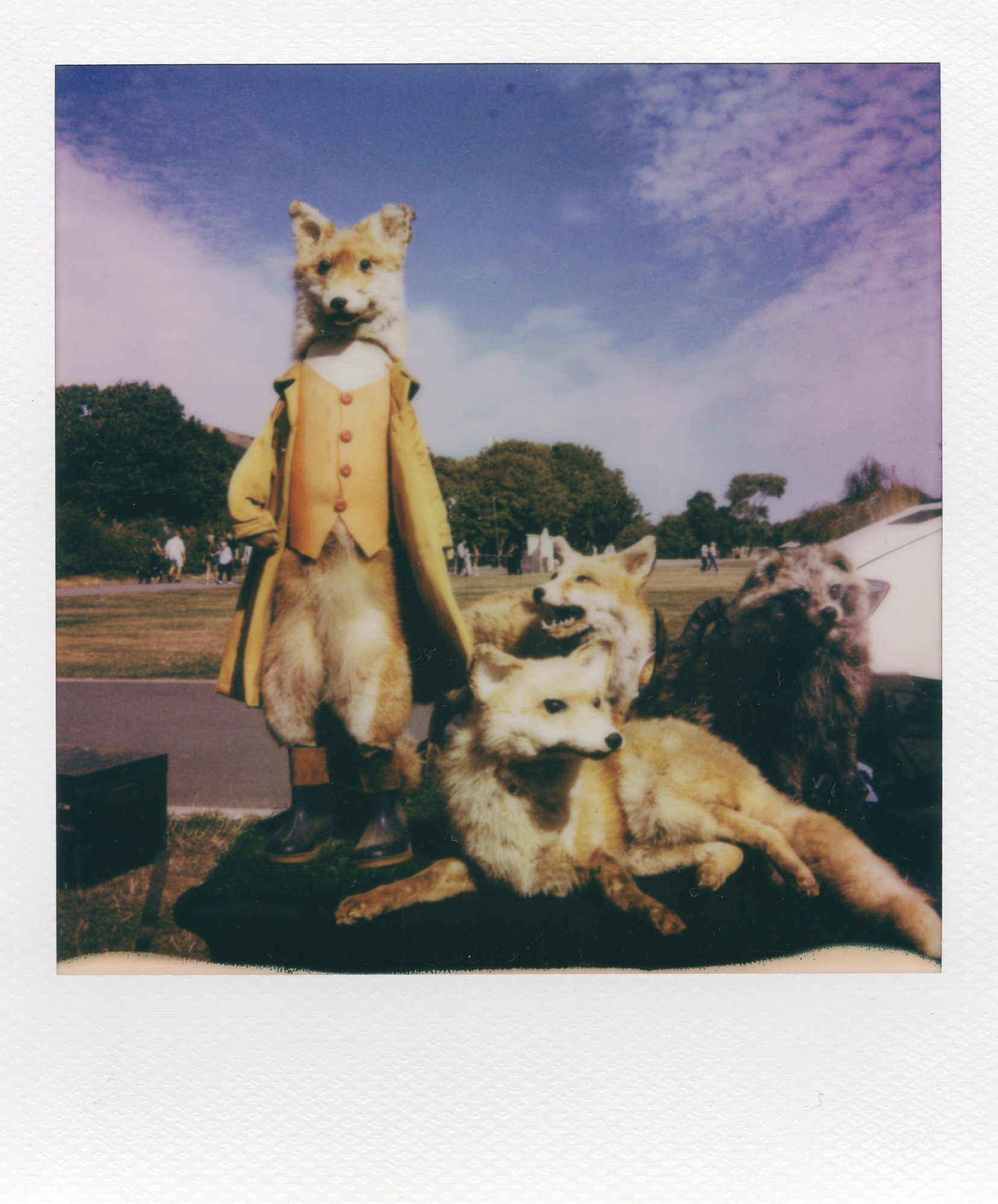
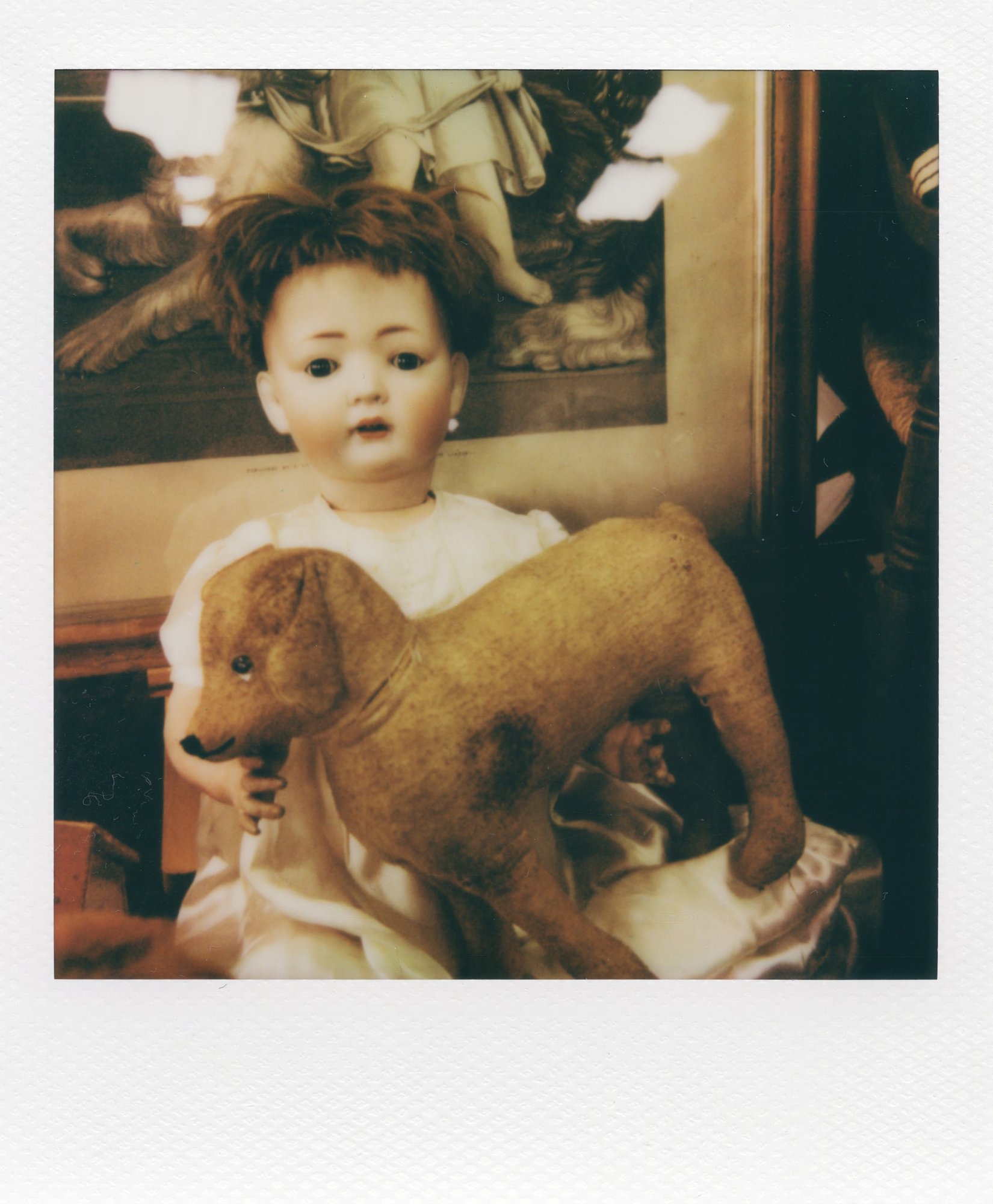
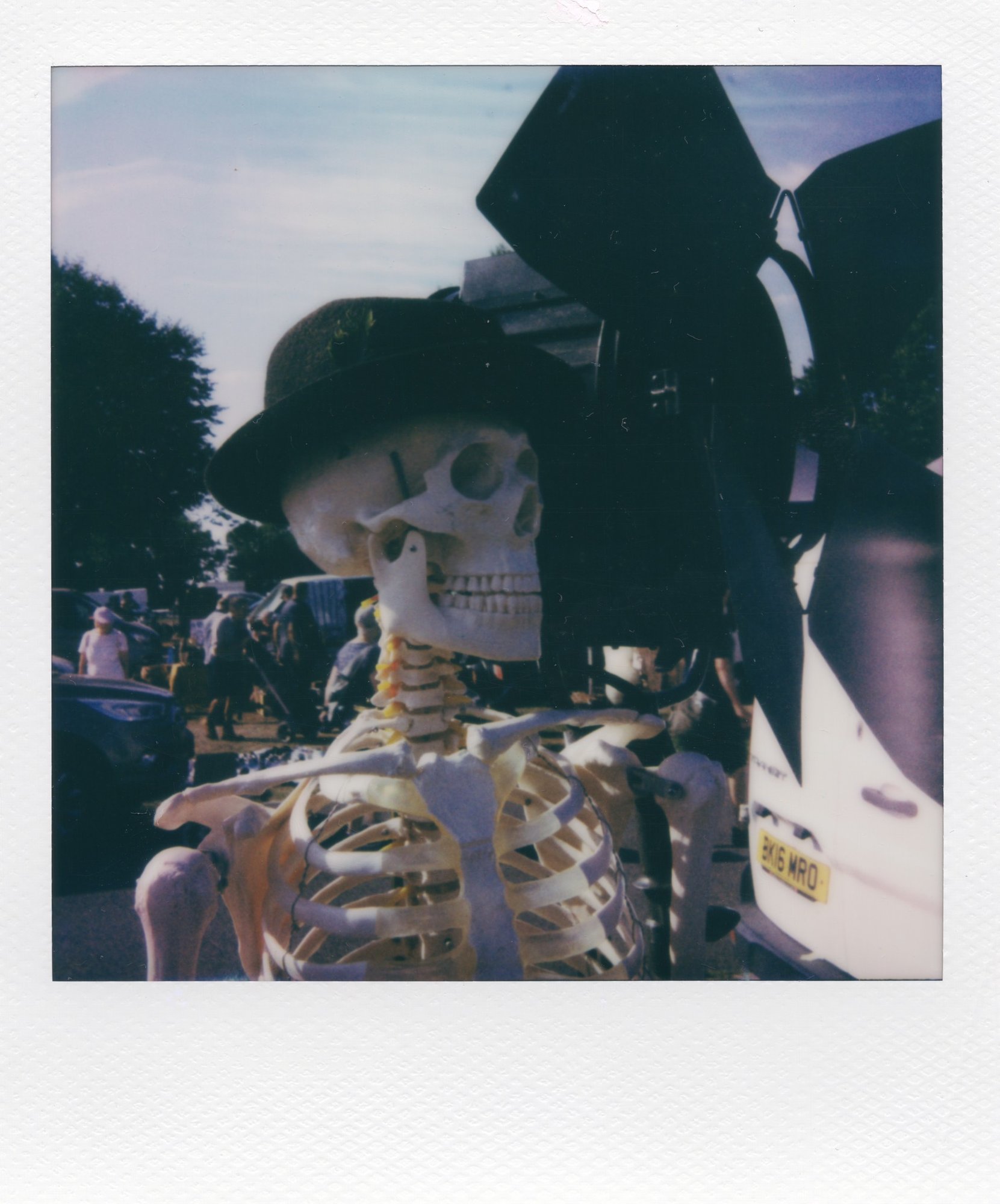
Every few weeks the Three Counties Showground at Malvern fills with the biggest flea fair in the country — acres of trestle tables and the strange tide of things the past keeps spitting back up. Taxidermy with the stuffing going, surgical tools nobody wants to picture in use, doll heads, mourning jewellery, jars of things best left unnamed. I go to look as much as to buy, and most of what catches my eye I photograph and leave exactly where it sits.
You get a feel, after a while, for the stalls that deal in the macabre — and it was on one of those, between a tray of military buttons and a box of foxed postcards, that I found the book.
A Victorian copy of Anatomy, Descriptive and Surgical — Gray's Anatomy, by Henry Gray, F.R.S. The cloth cover is the colour of dried blood, the spine fractured, the pages the texture of something that has survived more than it should have. Tobacco stains bleed into the margins like old bruises; whoever owned this read it slowly, repeatedly, in smoky rooms, fingers resting on the plates a little too long. It smells of dust and pipe smoke and closed doors that haven't been opened in a very long time.
There's a name inside: W. A. Mears, Sanitary Inspector, Gateshead. A man whose working life was spent among the drains and the diseases and the poor dead of an industrial town — and who kept this catalogue of the body close enough, and long enough, to stain it with smoke. I think about him more than I expected to: a public-health man in a soot-black northern town, turning these pages by lamplight, already half-living in the world the book describes.
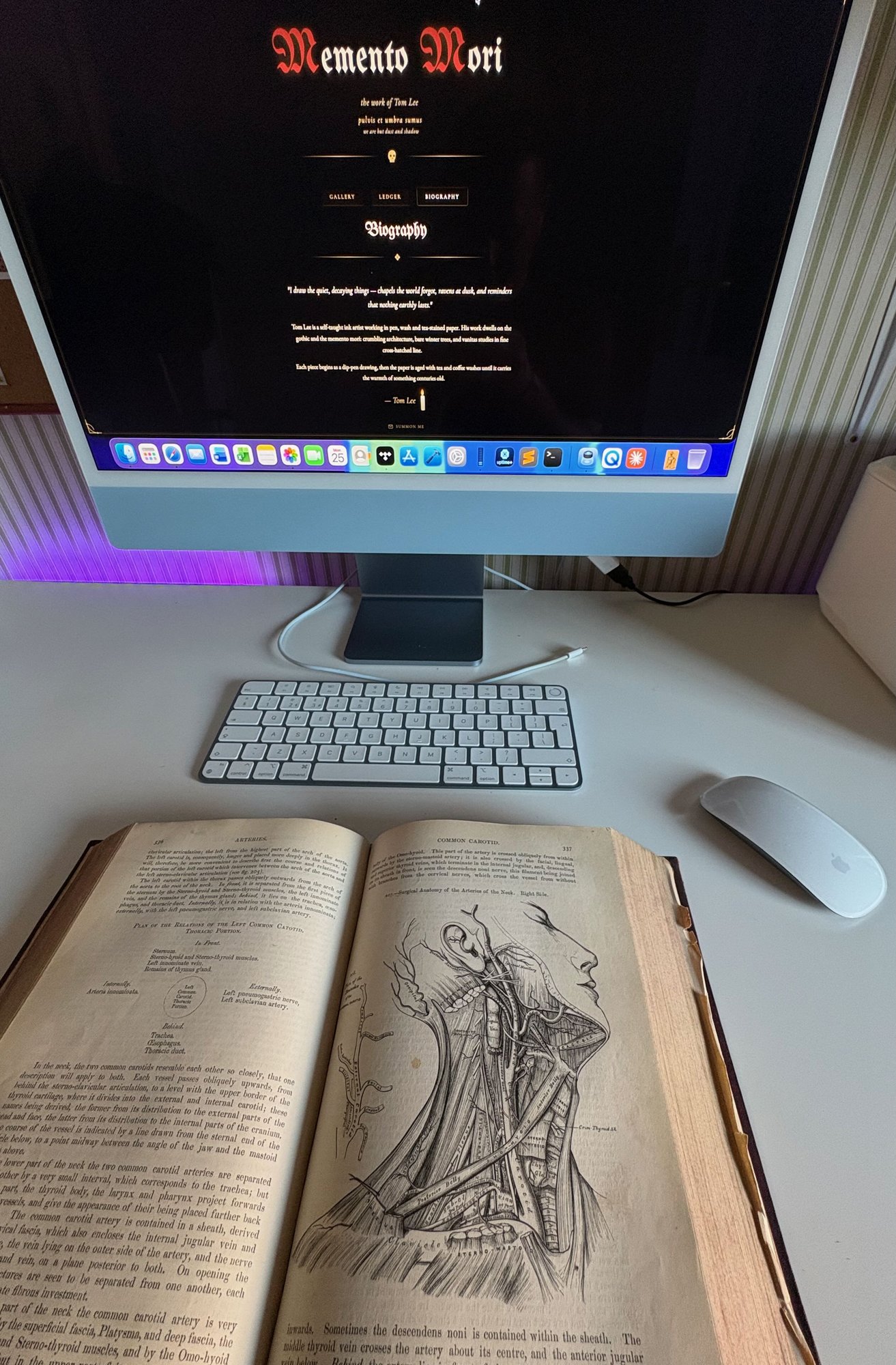
Printed plates, but made by hand first — and the title page is honest about how. The drawings by H. V. Carter, M.D.; the dissections jointly by the Author and Dr. Carter. So the two of them stood together over the opened dead — Gray and Carter, anatomist and artist-anatomist — and what they found there, Carter drew: three hundred and sixty-three times, straight onto boxwood blocks, in reverse, for the engravers Butterworth and Heath to cut the wood away around his lines. Every vessel, every tendon, every fold of exposed muscle, traced by hand and backwards before it was ever ink on a page. The printing made it a book. The handwork made it something else. The tobacco stains are heaviest around the most detailed pages — Mears lingered there too.
Neither man outlasted the book by as long as he should have. Gray, who put his name on the spine, took a royalty on every thousand copies; Carter, who drew every plate and held the other scalpel, was paid a single flat fee and very nearly left off the title page altogether — the forgotten half of a book the world still calls Gray's. And both, in the end, were taken by the very thing they had spent their lives mapping: Gray by smallpox in 1861, dead at thirty-four, three years after the first edition; Carter by consumption in 1897, after thirty years in India given over to leprosy and the other slow disfigurements of the flesh. The two men who drew the human frame more beautifully than anyone were each undone by its frailty. There is no neater memento mori than that.
I drew from this book — which is to say, I drew from Carter. The head and neck, opened from the side: jaw muscles exposed, the tongue visible, the throat laid bare, and the cervical spine running down the left like a ladder into the dark. Ink on toned paper, then aged by hand with tea-staining until it carried some of the same weariness as the original.
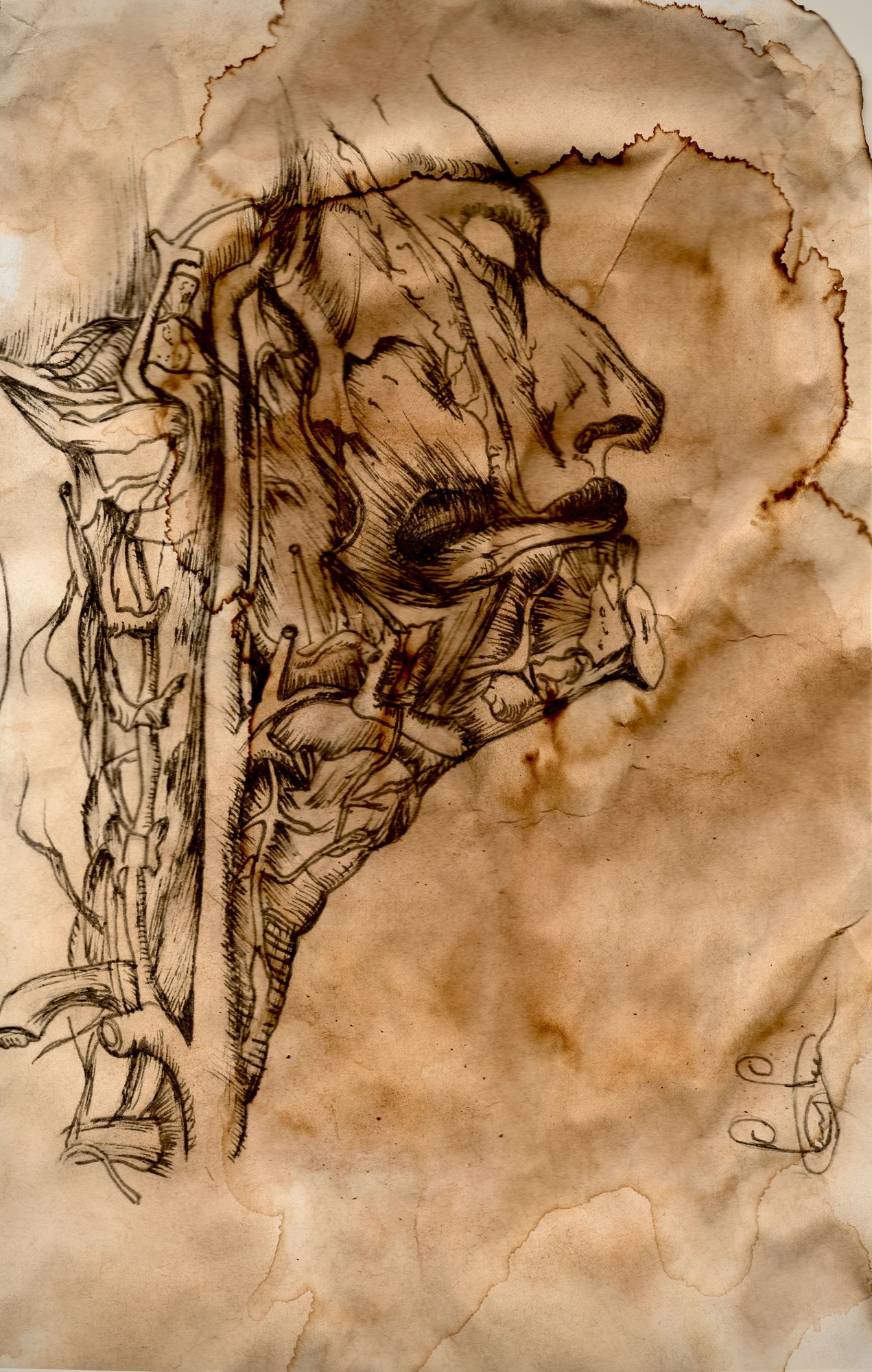
The Victorians understood something we've quietly agreed to forget — that underneath everything, we are temporary structures. Elegant, intricate, and perishable. They looked at that truth without flinching and recorded it in beautiful, unsettling detail. This book has already outlived its author, its draughtsman, and its sanitary inspector. One day it will outlive me too. That, in the end, is rather the point.
← Back to Ledger